Lots of new stuff coming out . . .

Well, I am nothing if not prolific.  PAYTON PETER ELLIOTT was released today, a recording of improvisations by myself, Peter Evans, and Elliott Sharp, playing as a trio.  It will be up on all major online retailers soon.  Equilibrium records also just released my first two acoustic solo marimba recordings, including Payton MacDonald: the solo marimba commissions, vol. 1, and Payton MacDonald: solo marimba improvisations, vol. 1.

I’m not sure how many people will actually buy this music, but hopefully a few.  I believe in it, anyway.  Some pictures of the covers:

working with JACK

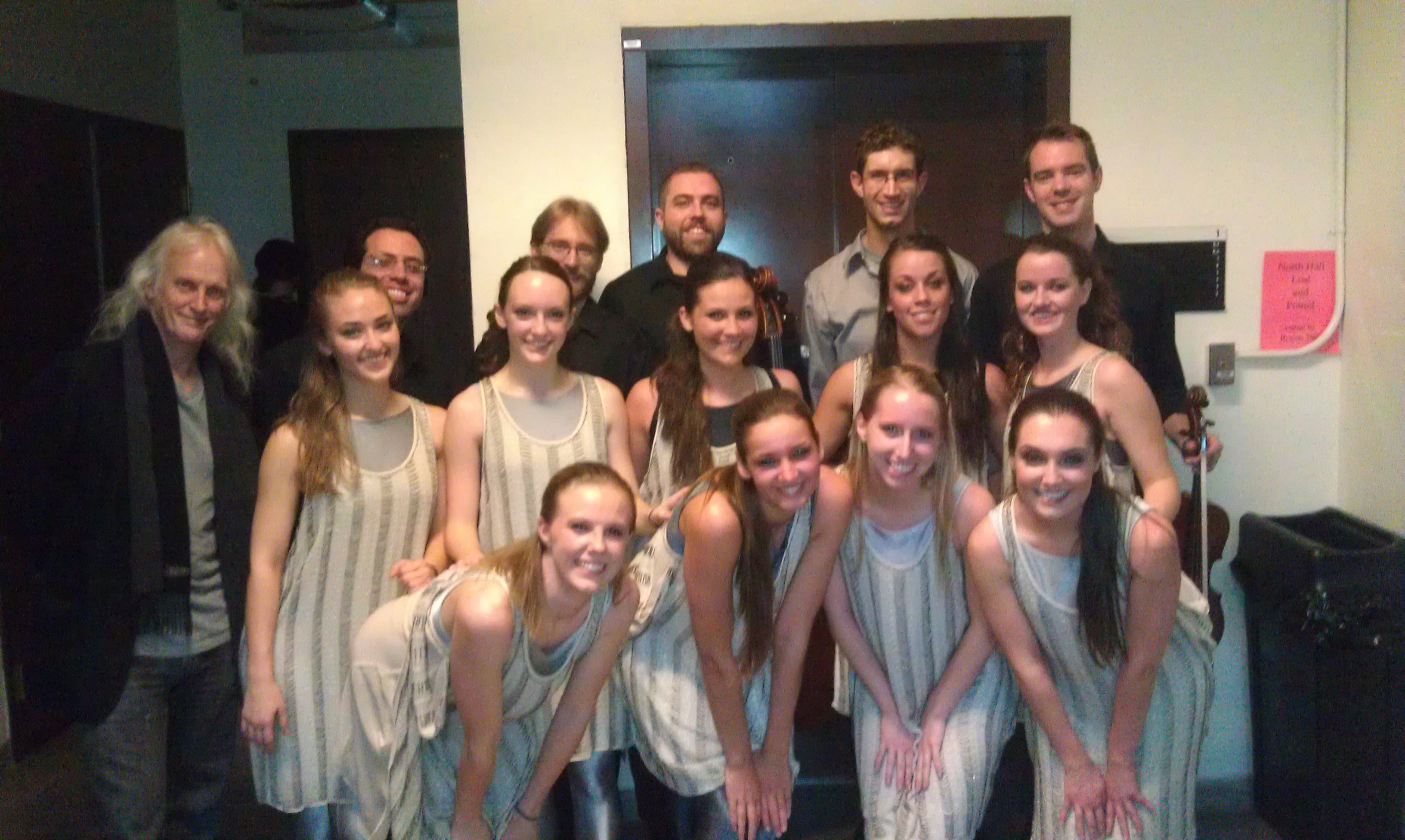
Great gig last week with JACK Quartet in Iowa.  We premiered my new piece Tongues in Trees, which is about 18 minutes and is for dance.  The dancers did a fabulous job.  We also made a recording of the piece and hope to release it soon.

Working with JACK Quartet

I’m out at University of Iowa this week working with JACK quartet.  I’ve known most of them since school and it’s really a pleasure to finally be making music with them.  There’s really nothing they can’t do.  Their technical and expressive prowess is both humbling and inspiring.  They’re also an easy and fun hang.

We’re premiering a new piece I wrote for them plus me called Tongues in Trees.  The title is from a Shakespeare quote about the glory and inspiration of nature.   It’s about 17 minutes long and in two movements.  The first is pretty mechanized in nature and I play a lot of IDM type stuff on drumset.  The second movement is quite lyrical and fluid and I play marimba.

I’m still hobbling around a lot.  See THIS.  But getting better.  Anyway, it’s going to be a great week.

Laid Up. Thinking About Life.

Four days ago on October 1, 2011 I was running about a half mile from home, finishing up a little warm-up brick before a sprint triathlon the next day, and I broke my ankle. I stepped off the pavement to avoid some traffic and ducked under a tree branch while simultaneously stepping over a hubcap and I misstepped with my left foot. My ankle twisted out and away from me and I heard a snap. In a flash I was on the ground. I knew immediately that something was wrong. I got up and tried to keep running, but that wasn’t going to happen so I hobbled back home.

Three hours later and a trip to the emergency room and I learned I had fractured my left fibia. Six to eight weeks before I can run again, at least two to four weeks before I can get in the pool or ride a bike. I obviously didn’t do the race the next day, and I also pulled out of several other races and an Alarm Will Sound gig.

There are bigger problems in the world so I’m not wallowing in self pity. I’m grateful I have access to good health care and a patient wife. I’m also grateful that the recovery rate is generally 100% for these things so I should be just fine in a few months and back to my intensely physical life.

A number of my friends have encouraged me to use the time to think about things a bit and then come out the other end with more clarity and purpose in my life. That’s a curious notion for me, as most of my best thinking comes when I’m doing. Indeed, the two are really one and the same with me. For better or for worse I’ve never been much of a deliberator. I follow my muse, saddle up, and go.

And go and go and go and go. It’s true I’ve been burning the candle at both ends for some time. After just four days of sleeping and sitting around I’m shocked at how much more rested I feel in general. Between the end of a long training season, the stress of school starting, and the pressure of various composition commission deadlines and upcoming gigs, and raising two little kids, my adrenal glands were firing on all cylinders pretty much 24/7. I’ve often gone weeks sleeping no more than five hours a night.

But the thing is that I like what I do. And now that I can see through the lens of a well-rested body and mind all I want to do is get back out there and do it more. I’m especially excited about the composing I’m doing now. I’m also excited about the endurance sports. The addition of endurance sports to my life in the past five years has been amazing, and it’s feeding into my creative work as a musician in myriad ways.

And I’ve begun to really chart my own path as an endurance athlete. My interest in racing and getting faster has waned as I’ve been drawn deeper and deeper into the woods. The long trail runs have become a staple of my life. If I go more than two or three days without getting into the woods I get anxious and uncentered. It’s made me wonder if the psychological problems so many people struggle with (especially in cities) might be a result of nature deprivation. (I increasingly see more and more articles citing scientific evidence to back that up.) The human world certainly has its wonders, but even a Beethoven symphony pales in comparison to a great mountain range or an ocean sunrise. It’s that Sense of Wonder that nature provokes. And being physically dynamic in natural environments heightens the experience for me. It is aesthetic, inspiring, and humbling.

So I dream of trail running and bike packing, and I plot my course for next year. I’m still going to do a few races, but I’m going to put much more energy into organizing my own solo events. Bike packing has opened up new vistas for me as I can go much further and much faster on my own accord, and make my own adventures, which will also include trail running and open-water swimming. (Go HERE for more information about bike packing.) Soon enough. By December I’ll be back on the bike and the trails.

In the meantime I’ll watch Warren Miller movies, read, get better at wrenching my bike, and hang out with my little girls.

Music and Art Criticism

Like everyone else in my field I use the good quotes when they come in and I ignore the bad ones. The good ones look nice on my website and it feels good to be keeping up with the Jones, but as time goes on it’s harder and harder for me to believe that music criticism is worth much. That goes for art, dance, and film too. (In this post I’ll use “art criticism” as a general term that encompasses music, art, dance, film, poetry, etc.)

This isn’t sour grapes. Like I’ve said, I’ve enjoyed a lot of good reviews from major news outlets. But since I’ve been on both ends of the critical spectrum my skepticism is informed. I used to write music criticism for American Record Guide. I poured over a dozen or so CDs a month and published a column titled “The Newest Music.” It was a good gig. I earned a few bucks and got an excellent survey of the field. I also honed my ability to discuss esoteric music with a lay audience. But after three years I threw in the towel. So many of the discs I was getting were from friends and colleagues that it became a conflict of interest. I couldn’t reasonably write anything objective.

Supposedly art criticism serves as an objective filter so that the public can make better decisions about where and how to spend their time and money. But most of the critics have their favorite styles and tend to stick with them, thus precluding any objective survey of what’s really going on in our incredibly diverse artistic world. Furthermore, many critics are friends with the artists they’re writing about. No matter how objective they may try to be, there’s no doubt that the line between criticism and PR becomes blurry at times.

Aside from those issues, the biggest problem I’ve found is that art criticism is often polemical and simple in a way that doesn’t reflect the complexity of an individual’s output. For example, here’s a passage from a recent New Yorker regarding the Royal Danish Ballet’s reception in recent years:

. . . . Partly, this was because the critics were then facing the full onslaught of Europe’s so-called ‘contemporary ballet’: rage, despair, panties. Such ballet, in the hands of Kenneth MacMillan, John Cranko, Maurice Bejart, Roland Petit, and others, stressed excitation above all: great whirlings and twirlings and pitchings of self and others onto the floor.

I’m not an expert on modern ballet, which is why this passage struck me. It’s not the content, but the form. Or, more precisely, it’s the lack of content. How is it that four accomplished choreographers’ life works can be summed up in one sentence as “great whirlings and twirlings and pitchings of self and others onto the floor?”

It’s no different in the musical world. For example, David Lang, Julia Wolfe, and Michael Gordon are often lumped together. That’s not entirely unfair as they’ve worked as a trio for over twenty years to build the Bang on a Can empire with the music marathon, record label, summer festival, etc, but in fact they write profoundly different music. Sure, there are some basic sonic similarities in Michael and Julia’s music, but when you get to the details that count they’re really entirely different composers. And David’s work is different in all respects.

I’ll also admit that I did the same thing when I wrote for ARG. “Isms” are convenient. Modernism, minimalism, post minimalism, whathaveyouism make writing criticism a snap. Lump, knead, write, and you’re all set. The writing part is the fun part. I suspect many art critics are frustrated poets who have found an outlet. They love to write and they love what they write. However, it’s doubtful whether any of that verbiage has anything to do with the complexity and nuance of art.

Alarm Will Sound rules!

Alarm Will Sound is enjoying our third year as the resident ensemble for the Mizzou New Music Festival. Stefan Freund and the University of Missouri hosts the festival, as well as Jeanne and Rex Sinquefield. We are deeply grateful for Rex and Jeanne’s support. They are visionaries in many areas and are quickly turning Missouri into a center of creative activity for contemporary classical music.

We’re here for two weeks. We’ve just finished the first week at Rex and Jeanne’s gorgeous 1,000-acre retreat where we’ve been rehearsing. My days have been fantastic: I wake up and compose for a few hours, then do my workout of the day, then rehearse for about six to eight hours with AWS, then hang with my buddies, then go practice and read for a while, then bed. Perfect.

I’m involved with three concerts next week: Super Marimba as part of an AWS chamber concert, a concert of eight new pieces by our guest composers, and the AWS concert, which includes world premieres of my new piece METADRUM and a piece by fellow-AWS member Matt Marks. Matt’s piece is a messed-up doo-wop tune. It is funny, elegant, and heartfelt. My remarkable colleagues in AWS not only play their instruments on the piece, but many of them sing as well. They sound incredible. Matt has a solo voice part and he’s totally convincing.

My piece is about 20 minutes long and it’s very intense. I’ve tried to create a powerful ritual experience for the audience. The title METADRUM refers to the drumming that permeates most of the piece. At times it is like a double percussion concerto with me and the phenomenal Chris Thompson as soloists. At other times the entire ensemble turns into a giant drumming machine. It’s a tough piece. It demands a high level of stamina and energy from the players. There are very few groups who have the chops to handle it. I’m fortunate to be working with such amazing players.

Alarm Will Sound is without a doubt one of the best musical ensembles in the world. Not a day goes by that I don’t thank my lucky star that I get to share the stage with these musicians. Not only do we play great music at a high level, but we discuss our repertoire and our projects democratically. Although we have an Artistic Director (Alan Pierson) and a Managing Director (Gavin Chuck), most of the artistic decisions are made by the group as a whole. It can be a laborious way to operate, but the result is consistently brilliant performances that display a level of courage and daring that is entirely unique. There are many ensembles that play music at a high level, but I can’t think of another one in this genre that puts together such original and compelling programs.

Alarm Will Sound rules.

Spring 2011

I’ve been on sabbatical this spring. I’ve used the time wisely. First I made two new recordings of solo marimba music, The Solo Marimba Commissions, Volume 1, and Super Marimba 3. Equilibrium records is releasing the first one. It’s primarily an online release, and will be available on itunes, etc, soon. The second one will find a home later this year.

I also finished a big piece for the NYU Steelband called Kids. Then I wrote a 20-minute work for Alarm Will Sound called METADRUM. AWS will premier METADRUM this summer at the Mizzou festival. It’s basically a double percussion concerto for me and Chris Thompson and at times the entire band turns into a giant drum.

Finally, I’ve been hard at work on my book about triathlon. Working title is Age Grouper: Swimming, Biking, and Running to a Life of Quiet Triumph. It’s about the various challenges and experiences we age groupers go through. I’ve conducted scores of interviews with various age groupers, as well as some of the legends of triathlon, including Dave Scott, Mark Allen, and Joe Friel. I’m pretty excited about this project. Hopefully it will be published next year some time.

How to Build an Audience for New Music

It seems like almost every day I hear someone complain about how contemporary classical music has no audience. It’s true our audience is small compared to pop music. Even the top new music ensembles like So Percussion or Eighth Blackbird are only getting about 15,000 hits on YouTube. That’s not bad, but compared to 61 million hits for a Britney Spears track it’s small change. But our audience would be bigger if we worked harder at building it. Fortunately, there are some talented musicians doing just that.

Later this week on January 30 I’ll be playing with my dear friends in Alarm Will Sound. I’m a founding member of the ensemble and after 10 years I love it more than ever. We’re playing a concert on the Ecstatic Music Festival, curated by the talented Judd Greenstein. We’re sharing the stage with Face the Music, a collection of courageous teenagers. Pianist Jenny Undercofler and composer Huang Ruo founded the ensemble in 2005 with the mission of bringing great music to younger people. Since that time the group has played at reputable music festivals and played works by major composers like Michael Gordon and John Adams. We’ll be performing Steve Reich’s seminal Tehillim.

Face the Music isn’t the only group of youngsters creating new music. Pianist Katy Luo runs an annual concert called A4TY (Album for the Young), which includes a newly commissioned work by an established composer (I wrote one this past year, other composers have included Elliott Sharp, Caleb Burhans, and Dennis Desantis). The Blooomingdale School supports A4TY, providing students and rehearsal space. The great thing about the A4TY concert is that it includes works by most of the performing musicians, some only five years old!

That’s how you build an audience. From the ground up. Ms. Undercofler and Ms. Luo have realized that gimmicks don’t work. We can’t compete with the fancy light shows and sound systems that major pop acts carry with them. Neither do we have the advertising budget or the support of the popular media. What we can do is realize that young people like creative music, especially teenagers.

Think about it for a minute. The kids are going through a tumultuous period of their lives. Their bodies are changing, their sense of self is solidifying, and they are gradually leaving the nest and embarking upon adulthood. During this process most of them will experience anti-establishment feelings. The Man is school, parents, a flood of media images telling them that they aren’t thin enough, muscular enough, rich enough. What is more anti-establishment than contemporary classical music? It’s creative, committed, and radically individualistic, everything the establishment is not. If you really want to give the finger to The Man, what better way to do it than to throw down on some Steve Reich or Xenakis?

Furthermore, so much contemporary classical music is loud, intense, and amplified. Not so different than a lot of pop music. There is both an aural and a philosophical connection for these kids. With the right leadership, they have a way to channel their creativity and energy, as well as their anger and angst. Some of these kids will end up being professional musicians, but many of them will end up in other professions. But their experience in these ensembles will be enriching and will build a life-long interest in them for contemporary classical music. They will continue to attend concerts, bringing family and friends with them. Congratulations to Ms. Undercofler and Ms. Luo for building a bigger audience with integrity.

The Drug of Exercise

“Exercise is for those who can’t handle drugs and alcohol.”
-Lily Tomlin

Tomlin was right on with that one. As an artist who specializes in experimental music, I’ve seen my share of drugs. They are endemic to my profession, and people have been offering drugs to me since I was in high school. Still, though, I’ve kept them at arm’s length. I tried marijuana during my undergraduate years and I still drink a beer on occasion, but that’s it. Narcotics never interested me and although I’m fascinated by hallucinogenics I’ve never really tried them as I’m not sure how I would react and am not interested in a bad trip.

But I understand why artists use them, especially pot and hallucinogenics. It’s for the Sense of Wonder. Sci fi writers first coined that phrase and it describes that incredible feeling when your entire worldview shifts and you see and feel and think things that are entirely new. For creative people it’s a magical feeling, a drug in its own right, powerfully addictive and alluring.

Of course the main sources of my daily dose of the Sense of Wonder come from composing, practicing, listening to great music, and reading great literature, but in the past four years I’ve gradually come to realize that equally powerful for me is exercise, especially endurance sports.

Four years ago I completed my first sprint triathlon. I didn’t know what I was doing and entered it on a lark and finished third to last, but I had a lot of fun and it was more productive than my usual puttering around the gym. One thing led to another and now four years later I’m averaging about seven races a year, consistently placing in the top third or quarter, training up to 12 hours a week, and working with a team. This passion of mine has become a major lifestyle shift. Now that my body has adapted to the training and the shorter races, I’m seeking bigger and more difficult events. This coming year I’m planning to complete my first 50K trail race, as well as my first 70.3 (half Ironman) triathlon (1.2 mile swim, 56 mile bike, 13.1 mile run). I also have my sites set on finishing a 50-mile trail race in 2012 and then a 100-mile trail race.

2012? But isn’t it only 2010? Yes, but endurance sports take a lot of careful training to avoid injury and maximize race potential. Indeed, one of the things I like most about this is its cerebral nature. One simply can’t do enough research about training and diet and about the human body. The more one knows, the better one can train and eat and push through physical and mental walls to reach greater heights of human experience.

And that’s where things get interesting. Even as I’ve progressed beyond the beginner stages as an endurance athlete and have become more seasoned, that Sense of Wonder still kicks in, and usually when things have become difficult. When my heart is pounding, and every cell in my body is screaming at me to stop, and every other rational being in the universe would be kicking back on the couch, I’m still going, pushing through walls of pain and exhaustion. Bursting through those walls is an indescribable euphoria. Finishing a tough training day or race produces feelings of incredible power. The world literally looks different. You see your potential. You feel it. And you learn that humans are capable incredible things, way beyond what you might have imagined before you started that race several hours ago.

That is the most powerful drug I’ve found so far, much stronger than regular drugs. And at this point I’m a full on junkie. I build my days around the training–still meeting my obligations as a father, husband, and professional–but if I have to get up at 4:00 a.m. to train I do it. If I have to get my run in after the kids are asleep then I do that. Whatever it takes to get that Sense of Wonder. I think this is why my in the last few years my creative powers have opened up and my percussion playing has gotten better. As I’ve trained my body to withstand longer, more punishing events, I’m more in touch with the Sense of Wonder and my own potential. The Romantic notion of the drug-addled creative genius is false. My creative powers are within me, and I can push them out only with intense, sustained effort. No pill, plant, or drink can do that for me.

Complex Music

A few weeks ago I was sitting next to a friend for a performance of Rimsky-Korsakoff’s Capriccio Espagnol. I love that piece. It is a successful piece on many levels and I find a lot of subtlety and nuance in the work. It is a public piece, not the same as, say, Elliott Carter’s music, but that doesn’t make it a less valuable work to me.

My friend clearly felt differently. He was visibly agitated, writhing around in his chair and muttering under his breath something about “this lousy music. . . ” I was a little annoyed at this, but willing to forgive him as he’s one of the most brilliant people I know. I know his tastes and I suspected that the public nature of the piece bothered him. Still, I couldn’t help but be taken back to my negative experience at June in Buffalo 12 years ago, in 1998.

June in Buffalo is a summer music festival that always features at least five “well-known” composers. Each of them gives a two-hour presentation throughout the five days, talking about their music. They all played some recordings, but only two of them really talked about their work. The other three spent the rest of their time complaining about Steve Reich and Philip Glass and what a horrible state classical music was in. It is etched in my mind for all time the moment one of them said that ” . . . Steve Reich and Philip Glass are ruining classical music the way Aaron Copland ruined it a generation before.” There were clearly issues of professional jealousy involved, but mostly the composers seemed bothered by the apparent lack of musical complexity in the music of Glass and Reich and others.

The problem with “musical complexity” is that it usually means various sorts of games and hidden architecture buried in the construction of a piece of music, a Glass Bead Game, if you will, played with notes and rhythms and notational devices. This approach to composing is certainly alluring for bookish intellectuals, and especially for graduate students with a lot of time on their hands, but it rarely reaches a broader audience.

And for good reason. I will shout this from the rooftops until the day I die: the most important elements of any musical composition are STORY and/or FUNCTION and/or RITUAL. Is there a story? If it doesn’t tell a story does it serve a function (e.g. dance music)? Or does it create a ritual experience? Sometimes it can be both a story and a game, as in the music of J.S. Bach, but that’s a happy coincidence of grammar and intent and genius that only happens every few hundred years. But the nature of storytelling is so hardwired into the human psyche that without it people literally can not comprehend what they’re hearing. Ritual is just as important. Rituals define us by marking off the major points in our life, moving us through liminal states to places of stability. This is why early minimalism, though so bare and uncompromising (and actually intensely modernist), gained such a big audience. Those concerts were ritual experiences, putting listeners on a journey through their psyche into new realms of being. And in that sense, the music was quite complex.

The notion of complexity goes far beyond the notes and rhythms. Music is a social activity, and one in which the production of the sounds is as important as the notes on the page. When one considers the interplay of all of those dynamics, a work like Capriccio Espagnol becomes quite complex indeed.

As my friend Caleb Burhans once so perfectly put it: “There’s a big difference between a piece of music theory, and a piece of music.” (Those two areas aren’t mutually exclusive, but that’s yet another conversation.) I’ve seen some composers labor and sweat over their composing for years and hardly write anything at all because they’re working so hard to build an elaborate piece of musical architecture, hoping it will cement their fame in the annals of music history. I imagine them sitting at their desks with a huge poster of Beethoven looming in the background. Sweat pouring down their faces, pencil in a death grip. “Must write masterpiece . . . must write masterpiece . . .” That must be a frustrating way to write music.

For the life of a composer the process is everything. You wake up, you write. If there’s a commission, you fulfill it. If not, then you design your own projects. Some pieces turn out amazing, some don’t, but you just keep writing. Sometimes you get paid, sometimes you don’t. And there are other ways to be creative, too. Maybe you curate events or teach students or play concerts, but one way or another you are actively involved in a life of creating music, not passively playing games with notes and rhythms and notation devices, hoping someone will write an article about you for a music theory journal.